
Photographing Peterborough Cathedral
A truly impressive building with such an interesting history.
I went to Peterborough for the antiques festival and spent more than I meant to. I came home with a load of new treasures and a working accordion I am still learning to play, badly. The cathedral was supposed to be a short detour on the way out of the city. It took the rest of the afternoon.
I had been once before, years ago, and only had time to walk through it. This time I paid the small fee for a photography permit and went round properly. Paying for it turned out to be the best thing about the day. Once you have handed over money to take pictures somewhere, you stop rushing.
The west front
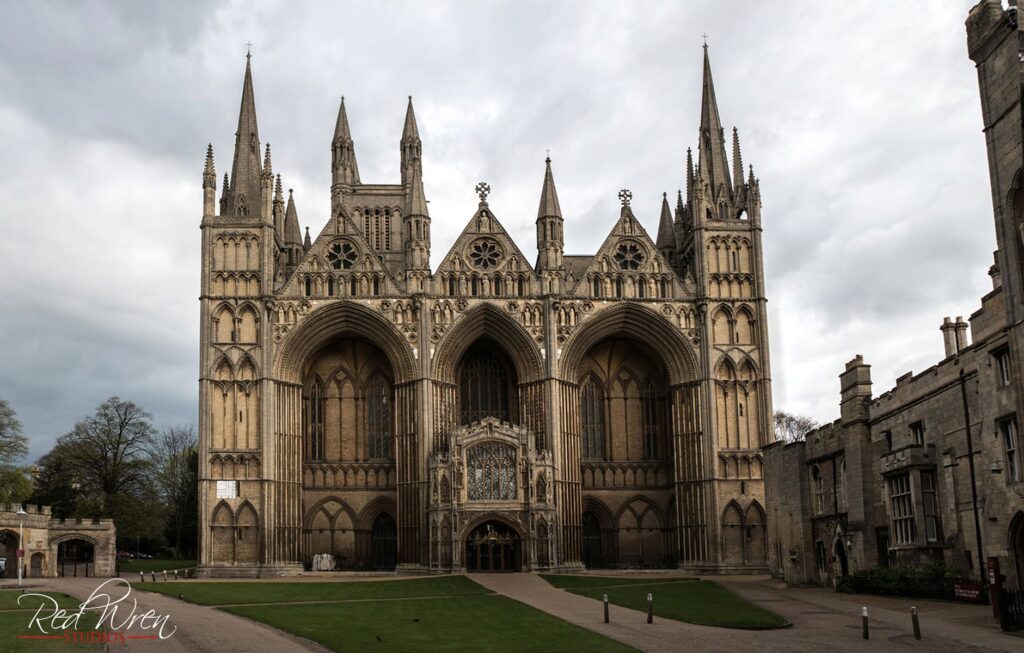
Most people photograph the west front first and then find they have nowhere left to go. It is three enormous Gothic arches, deeply recessed, and the scale is genuinely difficult to convey. Stand too close and you lose the top. Stand far enough back to get all of it and it flattens out into a postcard.
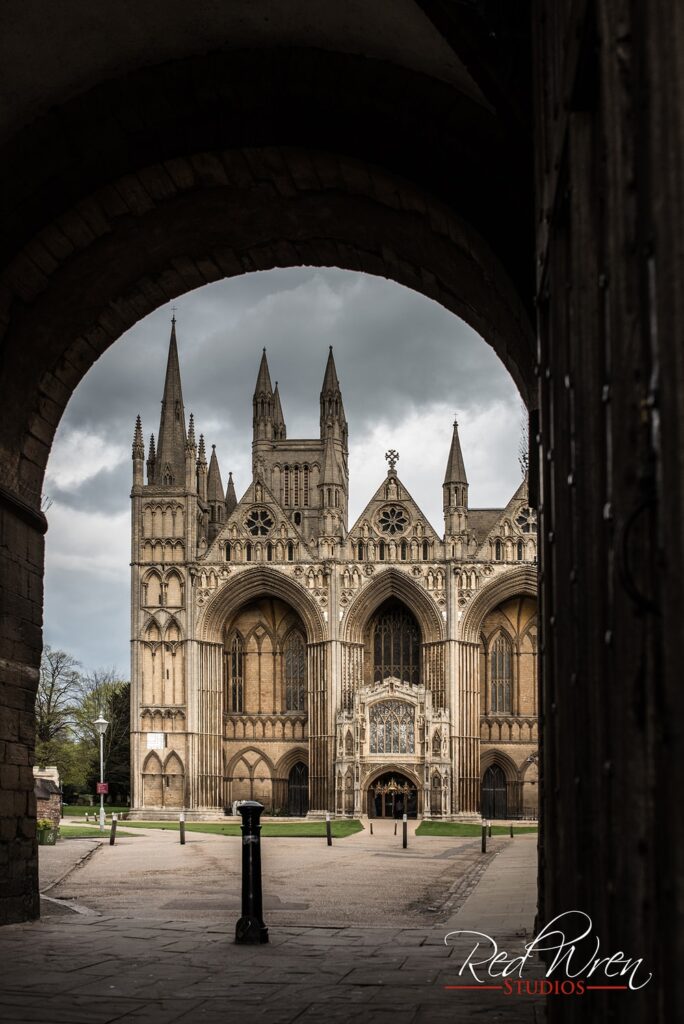
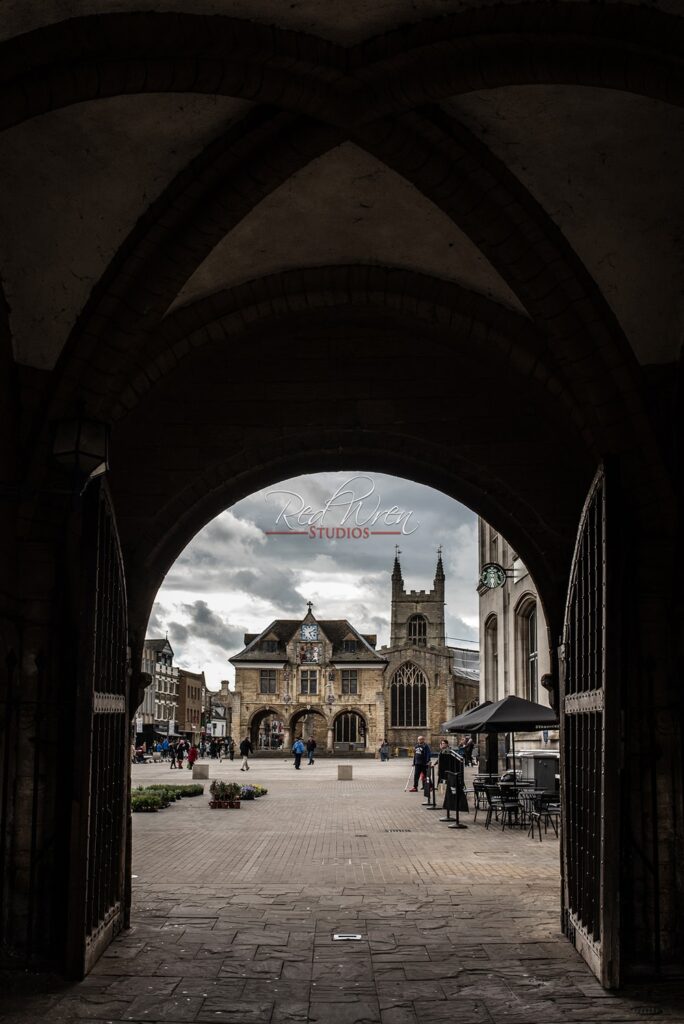
The frame I liked best was taken from inside the archway of the Norman gate, looking through. The dark stone on either side gives the building something to be big against.
Inside
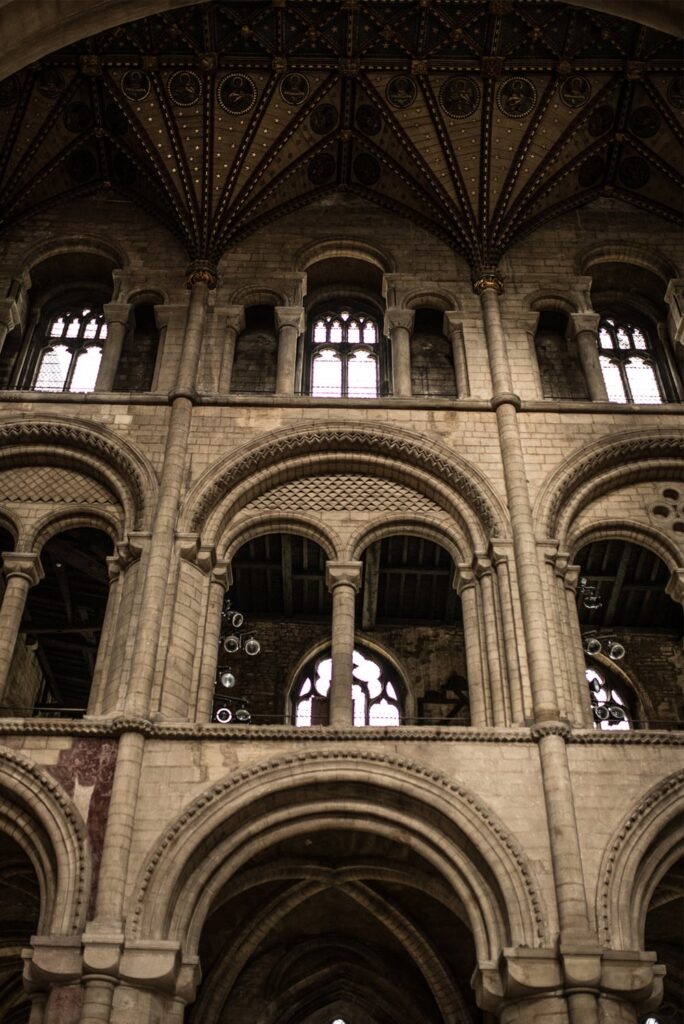
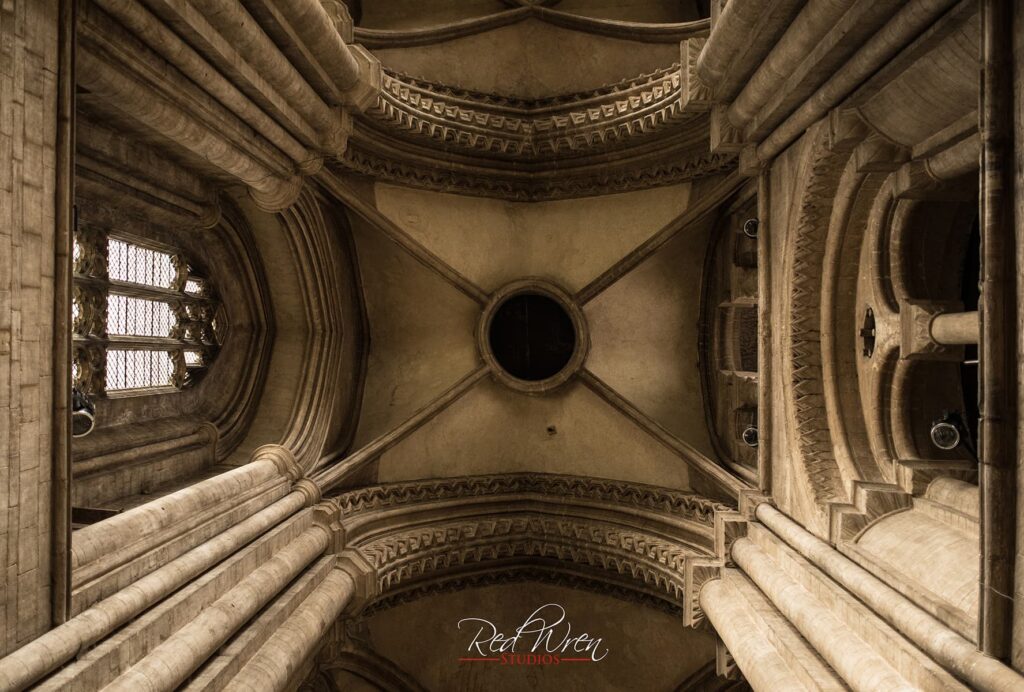
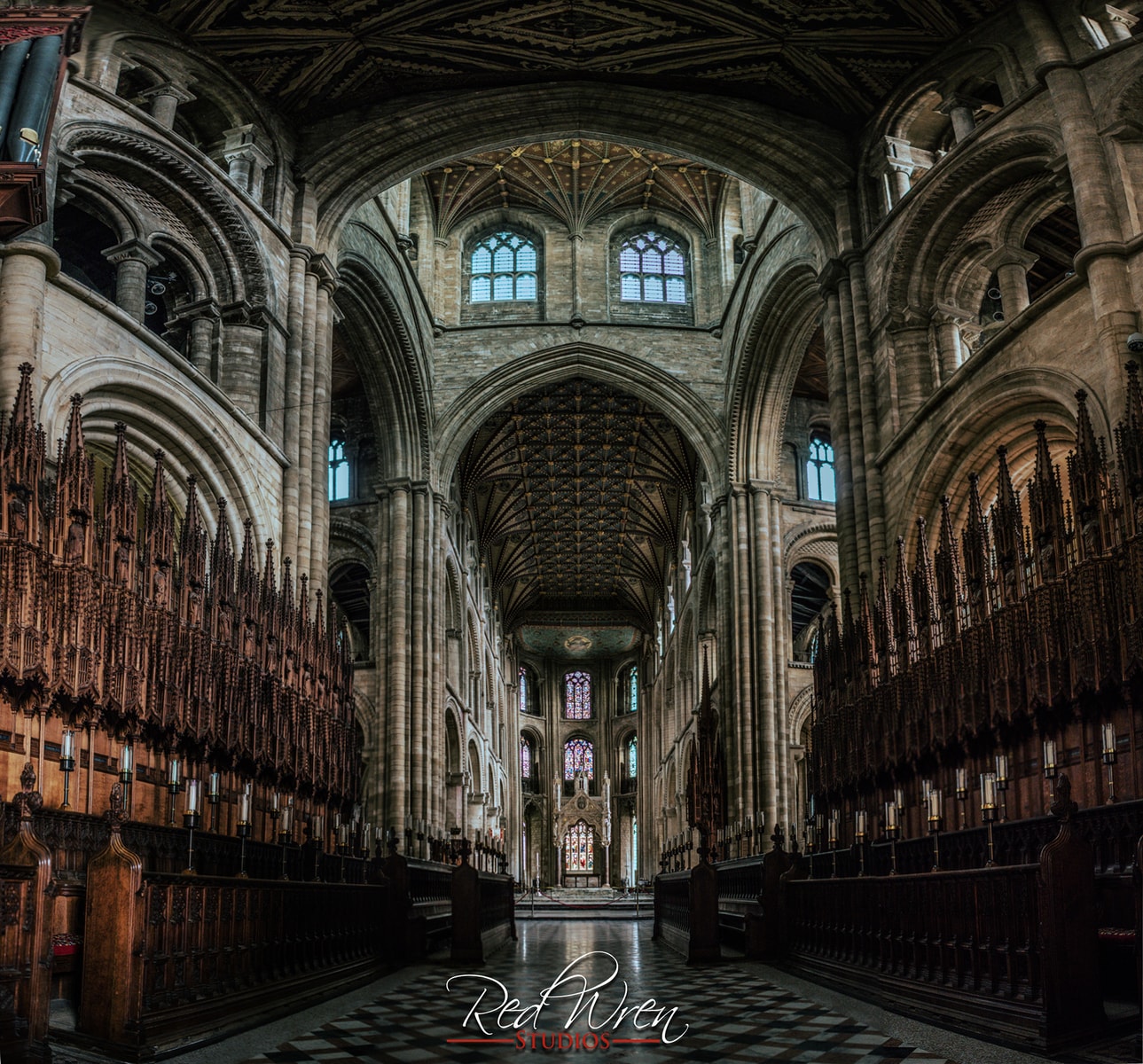
The nave ceiling is the thing worth going for. It is painted wood, thirteenth century, and one of very few of its kind left anywhere. It runs the full length above you in a lozenge pattern that is almost impossible to see properly from the floor without a long lens or a very steady hand.
The light inside is the real problem. Cathedrals are dark, and this one is no exception. Late afternoon is when the windows on the south side start doing something interesting, throwing colour onto the stone rather than just blowing out into white shapes. Anything earlier and you are working with a very flat, even, uninteresting light.
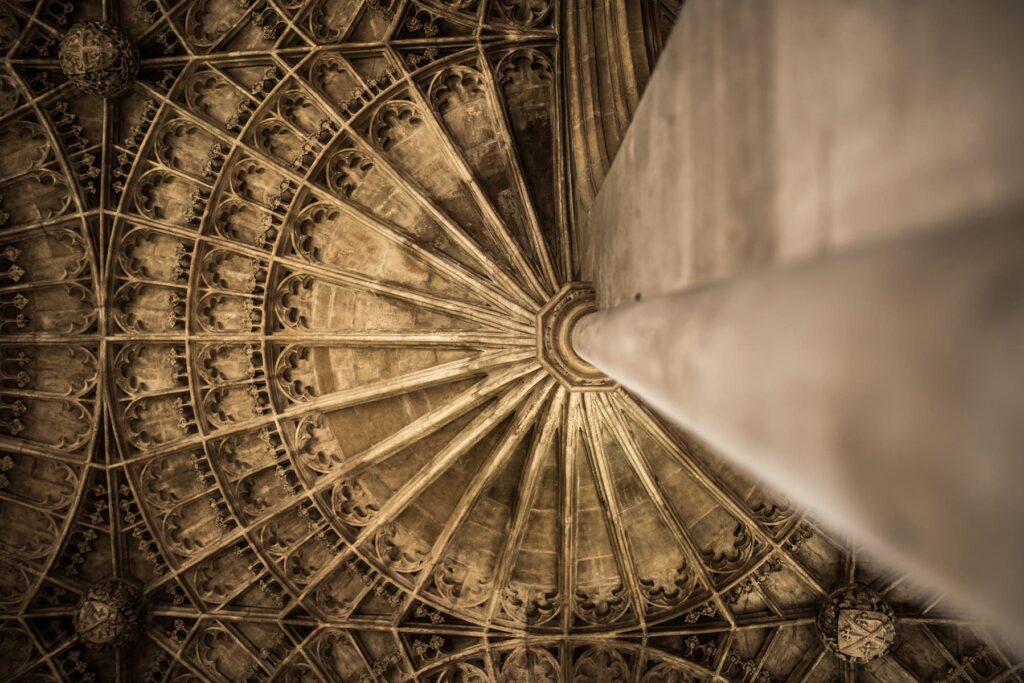
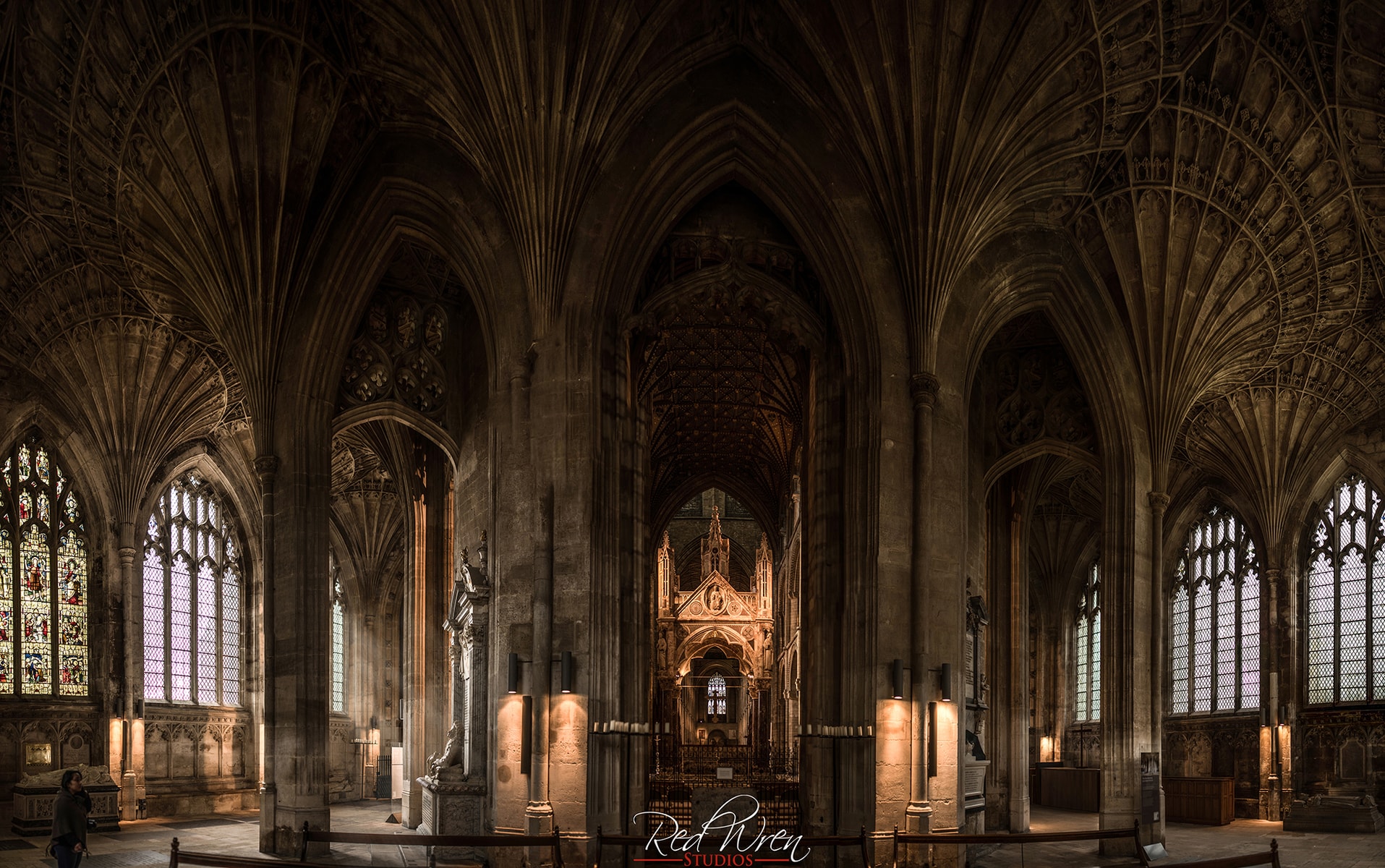
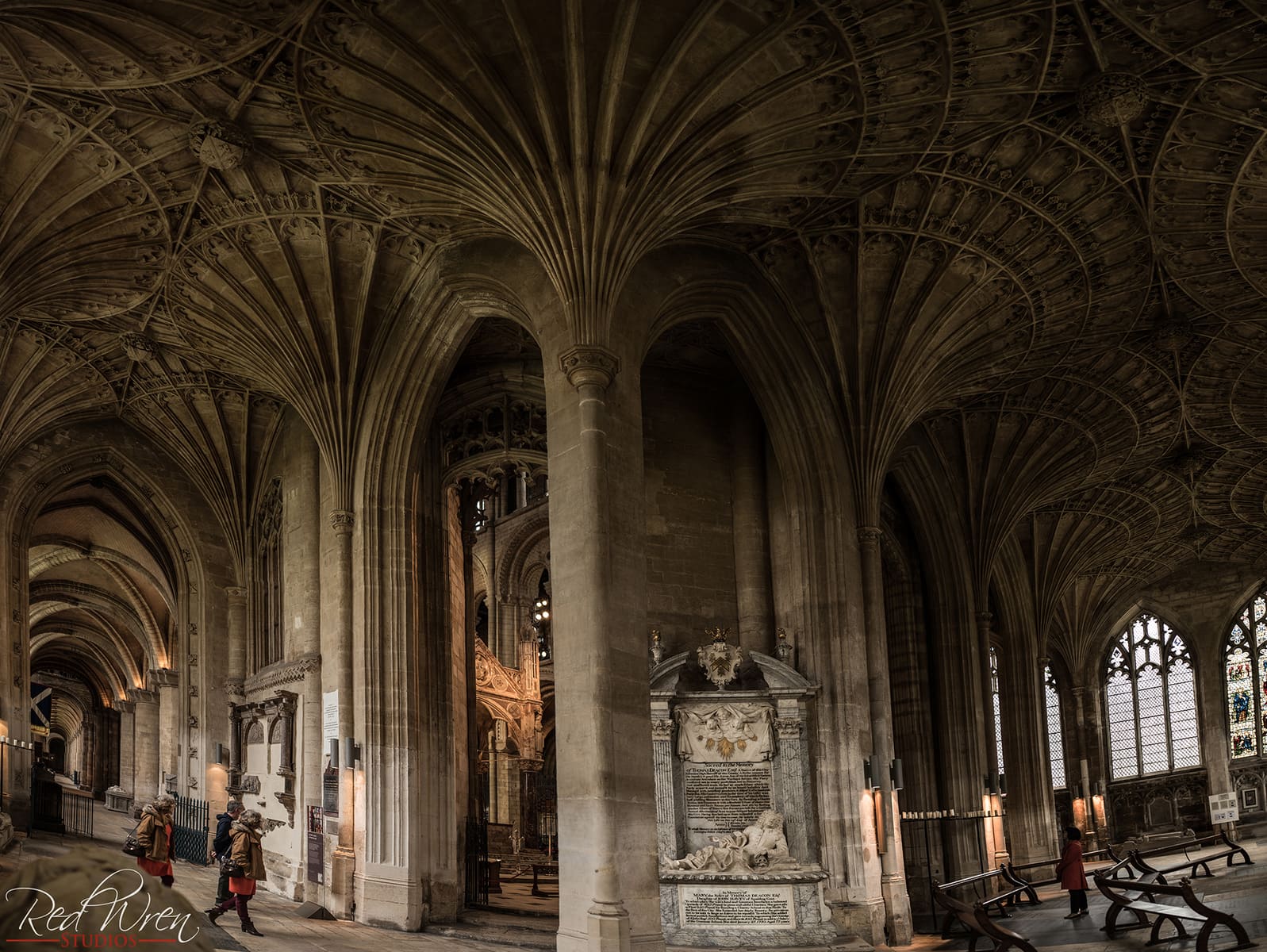
The eastern end is where it changes character. The fan vaulting there is far later work than the rest and it shows. My wife and I stayed under it a while. It is the one part of the building that feels designed to be looked up at.
Who is buried there
Catherine of Aragon, first wife of Henry VIII, was buried here in 1536. Her grave is still tended by visitors, who leave flowers and pomegranates. The pomegranate was her personal emblem, carried over from Granada, and there are usually a few sitting on the slab.
Mary, Queen of Scots was buried here too, after her execution at nearby Fotheringhay. She did not stay. Her son, James I, had her moved to Westminster Abbey once he came to the English throne.
Both graves are quiet corners rather than monuments, and both are worth photographing for what people leave at them rather than for the stones themselves.
If you are going to shoot there
There is a charge for a photography permit. Ask at the desk on the way in and check the current cost, as it has likely changed since my visit.
Go in the afternoon. The south windows do all the work.
A fast lens matters more than a wide one. You will be at high ISO regardless.
Check the tripod policy before you turn up with one. Many cathedrals restrict them during opening hours.
Give yourself two hours. An hour is not enough to do more than tick it off.
Looking for photography with a sense of place?
I photograph weddings, events and portraits in buildings like this one. Churches, halls, and places that mean something to the people standing in them.
I am based in Ipswich and work across Suffolk and East Anglia, and I travel further for weddings.
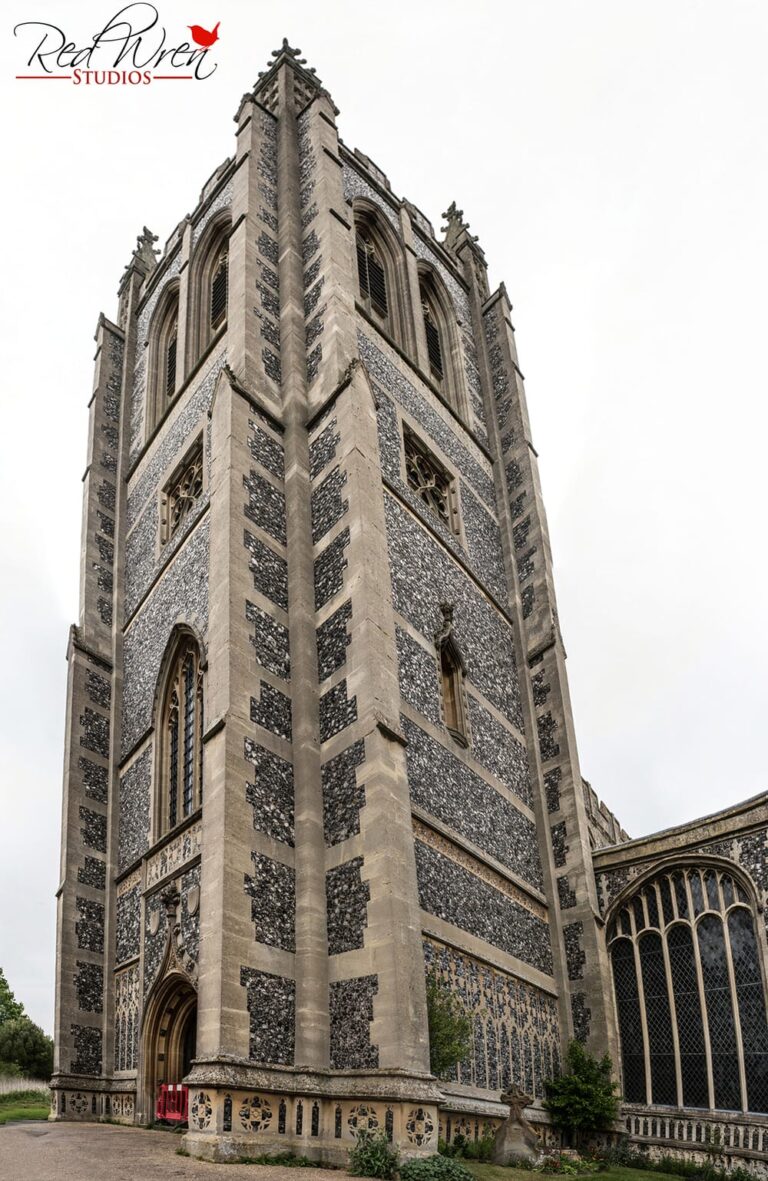
If you’d like to use one of these photographs, as a print for your wall or for something you’re publishing, I’d be happy to hear from you. And if you love old churches as much as I do, my photos of Holy Trinity Church in Long Melford are one of my favourite Suffolk sets.
You can also follow my work on social media via the icons at the bottom of this page.
View Wedding Photography
View Portrait Photography
Get in Touch